 by
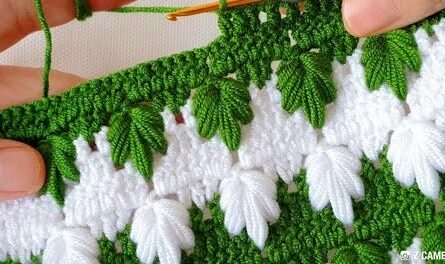
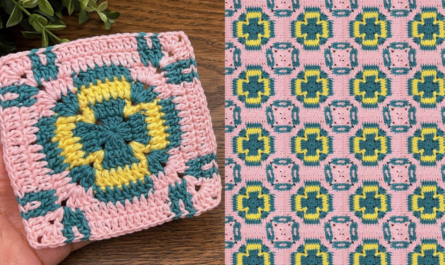
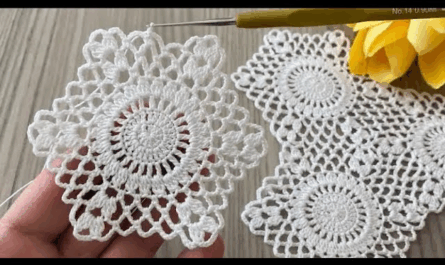
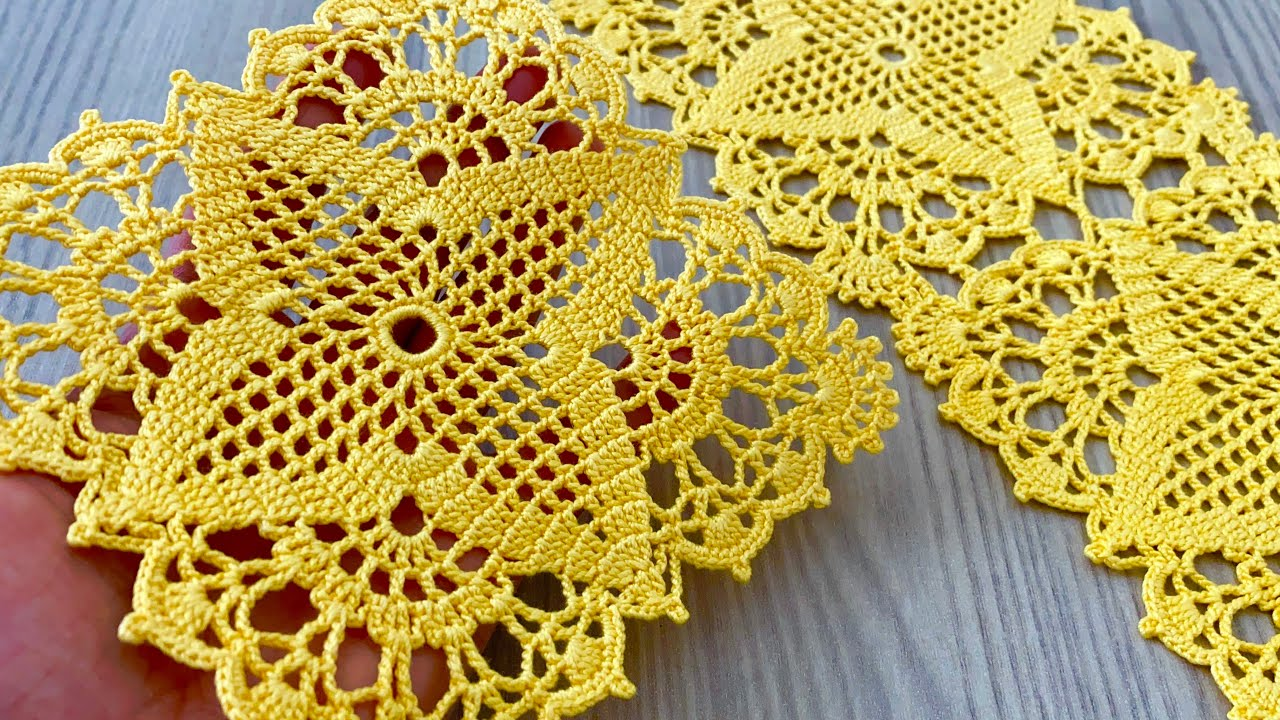
by That is an excellent choice for a project! Using a single Square Motif Pattern to create three different items—a Runner, a Blouse, and a Tunic—demonstrates the incredible versatility of modular crochet. The key is choosing a motif that is light, airy, and easy to join.
I will detail the pattern for the “Lacy Mesh Square,” followed by specific assembly instructions for each of your desired models.
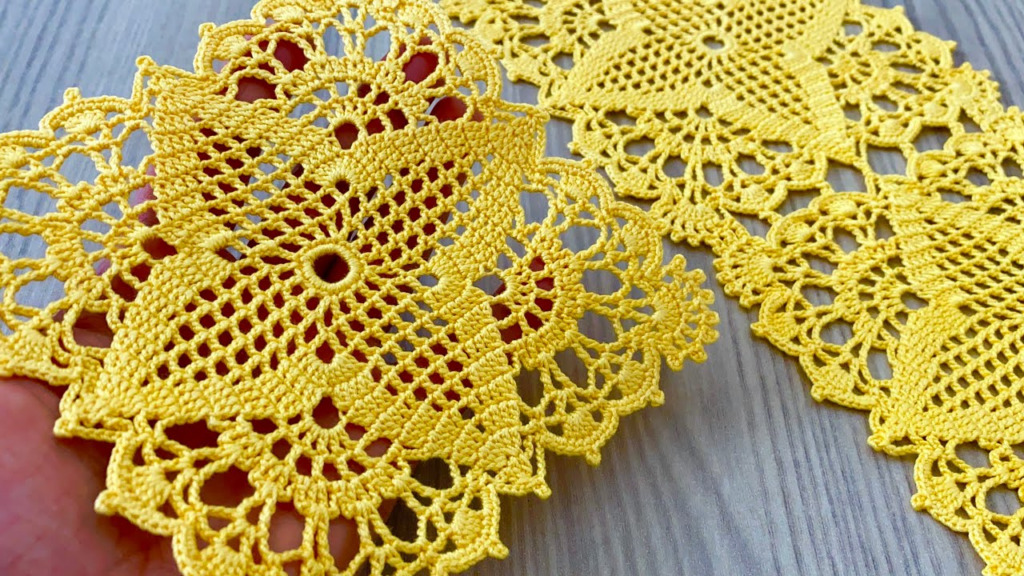
💎 Lacy Mesh Square Motif Tutorial
This square uses a clean, dense center and transitions into an open, granny-style mesh frame, making it lightweight for garments yet stable for runners.
Materials You’ll Need
- Yarn: DK Weight (Size 3) or Sport Weight (Size 2) cotton or a blend is ideal for a blouse/tunic drape. Worsted/Aran (Size 4) is fine for a runner.
- Crochet Hook: The size appropriate for your yarn (e.g., 3.5 mm – 4.0 mm for garments, 5.0 mm for a runner).
- Scissors, Tapestry Needle, Blocking Pins.
Key Crochet Terms
| Abbreviation | Stitch Name |
| ch | Chain |
| sl st | Slip Stitch |
| dc | Double Crochet |
| Cluster (Cl) | 3 dc worked into the same space |
| Corner | (Cl, ch 2, Cl) |
Part 1: Crocheting the Motif
Round 1: Foundation (Solid Center)
- Start: Make a Magic Ring. ch 3 (counts as dc). Work 15 dc into the ring.
- Finish: Pull the tail tight. Join with a sl st to the top of the ch 3. (16 sts).

Round 2: Setting the First Clusters
- ch 3 (counts as dc). Work dc in the next 3 dc stitches below.
- Corner Space: ch 2.
- Repeat: Work [dc in the next 4 dc sts, ch 2] 3 more times. (4 sides of 4 dc, 4 ch-2 spaces).
- Finish: Join with a sl st to the top of the ch 3.
Round 3: Defining the Lacy Square
We begin the open mesh structure, placing the clusters into the gaps.
- Move to Corner: sl st over the next 2 dc and sl st into the ch-2 corner space.
- First Corner: ch 3. Work (2 dc, ch 2, 3 dc) into the corner space.
- Side: ch 1. Work Cluster (3 dc) into the space between the 2nd and 3rd dc of the side below. ch 1.
- Repeat: Continue the sequence [Corner (3 dc, ch 2, 3 dc) in the next corner, ch 1, Cluster in the side gap, ch 1] 3 more times.
- Finish: Join with a sl st to the top of the ch 3.

Round 4: Expanding the Mesh (Final Size)
This round creates a clean, uniform edge perfect for joining.
- Move to Corner: sl st over the next 2 dc and sl st into the ch-2 corner space.
- First Corner: ch 3. Work (2 dc, ch 2, 3 dc) into the corner space.
- Side: Work [ch 1, 3 dc in next ch-1 space] across the side until you reach the next corner.
- Repeat: Continue the sequence [Corner, (ch 1, 3 dc in next space) across the side] around the square.
- Finish: Join with a sl st to the top of the ch 3. Fasten off.
Part 2: Assembly and Model Construction
For all three models, use the Join-as-You-Go (JAYG) method (or slip stitch/whipstitch the finished squares together).
1. Runner Model
- Construction: A long, narrow rectangle (e.g., 2 motifs wide by 8–10 motifs long).
- Dimensions: Use a larger hook and yarn (Size 4) if you want a thicker runner.
- Finishing: Once joined, add 1-2 rounds of Single Crochet (sc) or Moss Stitch (sc, ch 1) evenly around the entire perimeter to create a clean, straight border. Block aggressively for a crisp, flat finish.

2. Blouse Model
- Construction: Two large rectangular panels (Front and Back) joined at the shoulders and partially down the sides.
- Sizing: Determine the required width (Bust + Ease / 2) and build your panel to that width (e.g., 4 motifs wide).
- Assembly:
- Shoulders: Join the top edges together, leaving a Neckline Gap (usually 8–10 inches) in the center.
- Sides: Join the side edges together, starting from the bottom, leaving a sufficient Armhole Opening (usually 7–9 inches) at the top.
- Finishing: Work 1–2 rounds of Single Crochet (sc) around the neckline and armhole openings for a tidy, stable edge.
3. Tunic Model
- Construction: Identical to the Blouse, but the panels are extended in length.
- Dimensions: Requires more motifs, as the length needs to extend to mid-thigh or knee (e.g., 8–12 rows of motifs high).
- Shaping: If you want a slight A-line flare, you can increase the size of the motifs slightly in the bottom rows, or simply size up the hook for the bottom third of the tunic panels.
- Finishing: As with the blouse, stabilize the openings with sc edging.
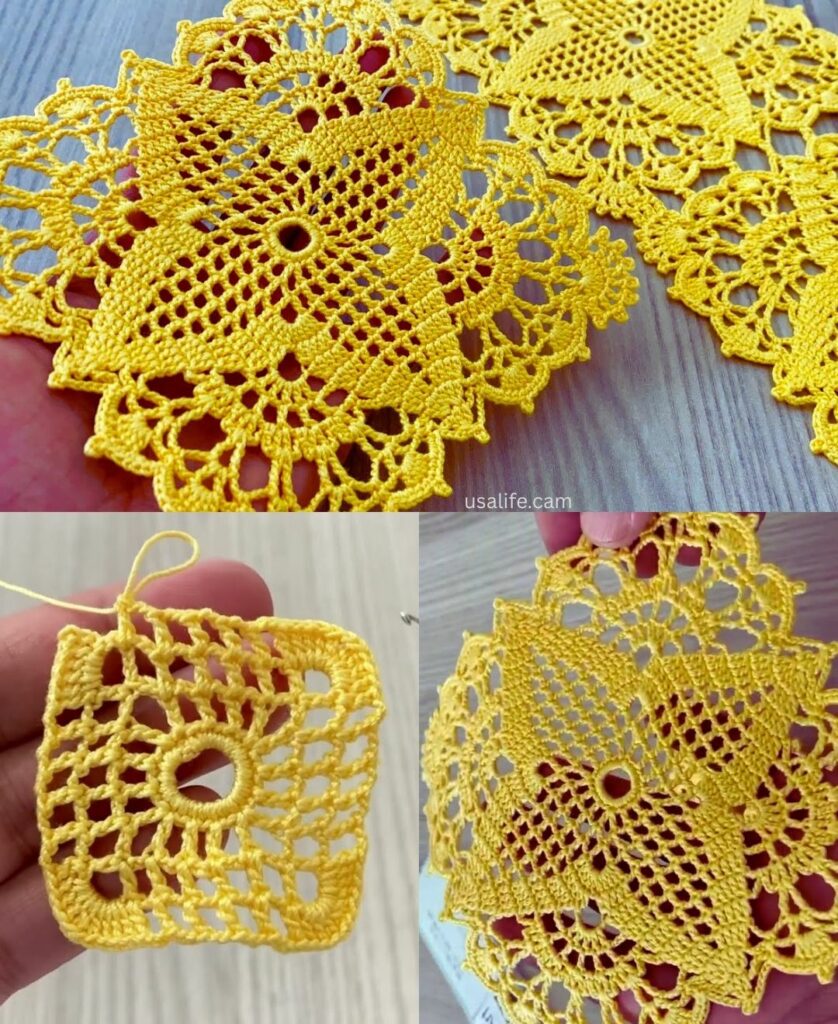
Final Step: Blocking
Blocking is essential, especially for the blouse and tunic. Wet the finished project, gently stretch and pin it to the correct shape (straight edges for the runner, garment shape for the blouse/tunic), and let it dry completely. This step ensures the motif lace opens up and the fabric drapes beautifully.
Would you like specific advice on selecting the right yarn size for the drape you want in the blouse?
Video tutorial: