 by
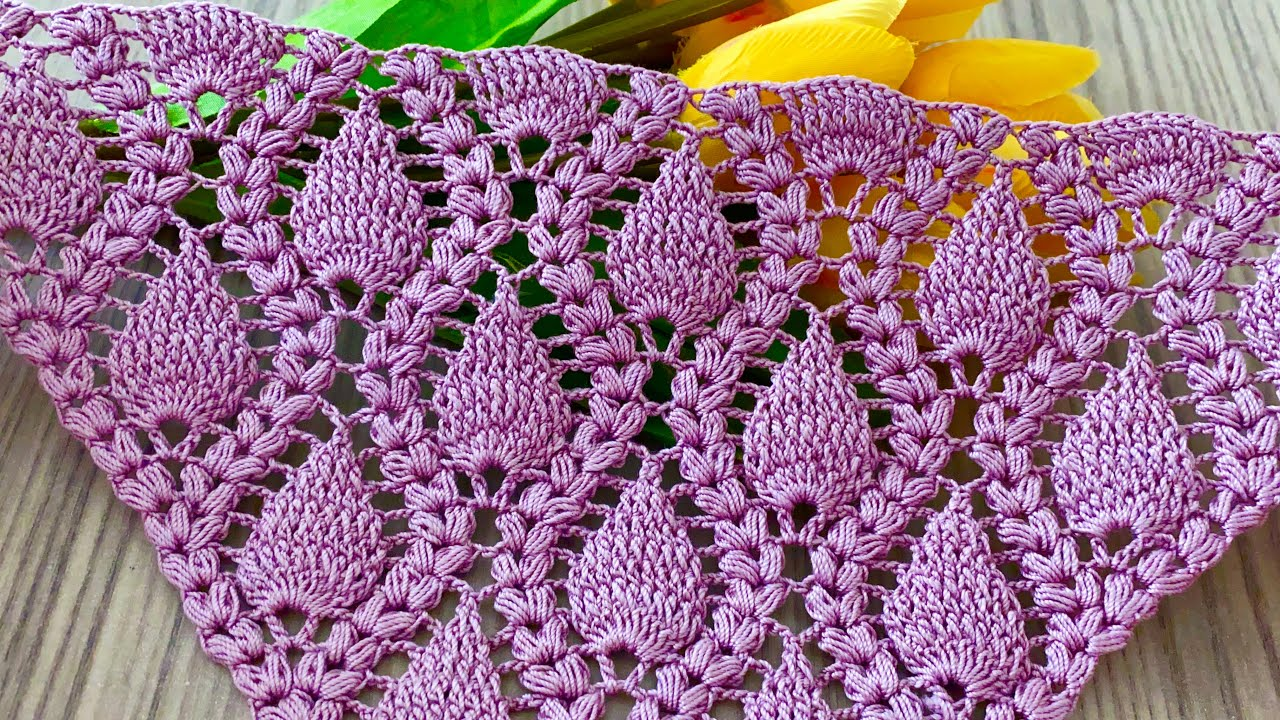
by The Pineapple Pattern is one of the most classic and recognizable lace motifs in crochet, celebrated for its intricate, fan-like structure that resembles the fruit itself. It’s perfectly suited for shawls and scarves because the lace construction provides beautiful drape and lightness—ideal features for warmer climates like Phnom Penh.
For these projects, yarn choice is key: 100% cotton or a cotton/bamboo blend in a DK (Category 3) or Lace/Fingering (Category 1) weight is recommended. Cotton offers excellent stitch definition, and the lighter weights ensure the finished item is airy and flows beautifully.
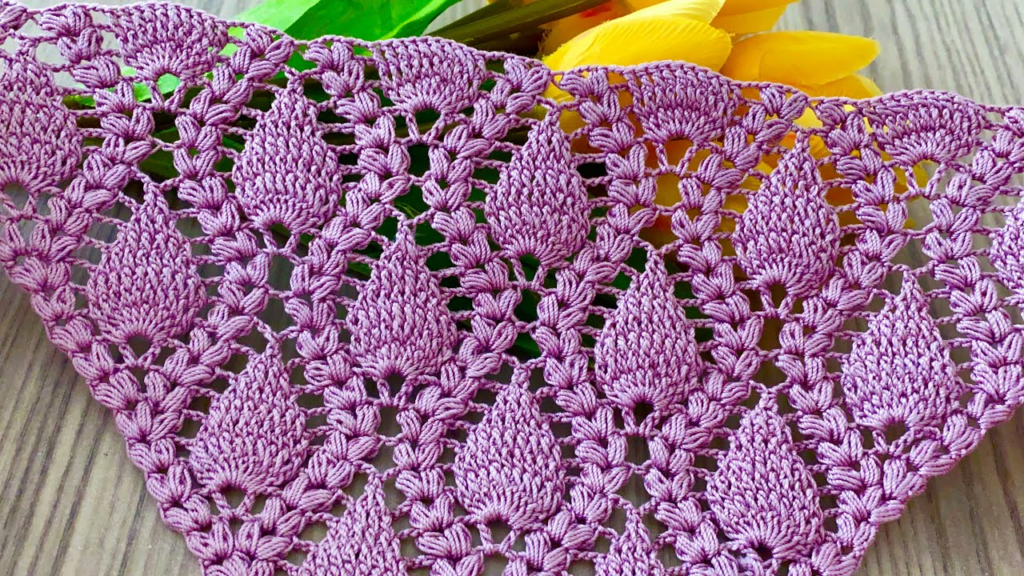
Understanding the Pineapple Stitch and Its Structure
The pineapple pattern is essentially an expanding lace shell combined with a contracting mesh section.
- The Shell/Fan: The row begins with a dense cluster of stitches (like double crochet—dc) forming the base of the “pineapple.”
- The Mesh Body: The next several rows use chain spaces (
ch) and single crochet (sc) or slip stitches (sl st) to form a descending, rounded mesh cage. - The Shell/Fan Repeat: A new, larger shell/fan is built below the mesh, growing out of the previous fan, marking the top of the next “pineapple.”
This creates a graceful, cascading scallop or row of open fans that is highly decorative.
1. How to Crochet a Pineapple Pattern Triangle Shawl
A triangle shawl is typically worked top-down from the center top point, increasing outward in each row to create the triangle shape.
A. Essential Stitches and Concepts
- Chains (ch), Slip Stitch (sl st), Single Crochet (sc).
- Double Crochet (dc).
- V-Stitch: Often used in the increasing corners.
- Increasing: Done at the center spine and both edges of the row.

B. General Construction Outline (Top-Down Triangle)
- Start: Create a Magic Ring (MR), or
ch 4and join with asl st. - Base Rows (Yoke): Work a few rows of
dcandchspaces, increasing at the center (V-stitchor[dc, ch 2, dc]) and at the beginning/end of the row to establish the triangle shape. - Establish the First Pineapple: In a key row, you will work the Shell stitch that will eventually become the first pineapple motif.
- The Mesh/Body Rows (Contracting):
- Work a series of rows using
scandchspaces (e.g.,sc, ch 3, skip 3, sc). Each successive row of this mesh will have fewer chain loops than the last, causing the section to curve inward and create the rounded bottom of the pineapple shape. - The center spine and the edges will continue to use increases to maintain the triangle shape.
- Work a series of rows using
- New Pineapple Base (Expanding): After the mesh section contracts, the next row will use a cluster of
dcortrstitches (the new shell) anchored at the bottom of the contracting mesh. This shell uses multiple stitches in one space, causing the pattern to expand dramatically again. - Repeat: Continue alternating between the expanding Shell/Fan rows and the contracting Mesh rows. Each pineapple motif you create will be larger than the last, growing the shawl toward the final size.
- Border: Once the shawl reaches the desired size, finish with a heavy border of
dcor a decorative shell edging. - Blocking (Crucial!): Triangle lace shawls must be blocked. Pin the shawl firmly to shape, paying close attention to opening up the lace and stretching the points. Wet block and allow to dry completely to set the lace.

2. How to Crochet a Pineapple Pattern Scarf
A scarf is typically worked lengthwise in rows to achieve a long rectangle. This method is often simpler, as you only need to worry about expanding and contracting the motif within the established width.
A. Essential Stitches and Concepts
- The same basic stitches as the shawl, but focus on maintaining straight sides rather than increasing every row.
- Repeating Pattern: The pattern will repeat across the width of the scarf.
B. General Construction Outline (Rectangular Scarf)
- Start: Chain the desired length of your scarf (e.g., 60-70 inches). This creates your long foundation row.
- Row 1 (Base): Work a row of
dcorscacross the entire chain.ch 3, turn. - Row 2 (Establish Motif Repeat): This row sets up the number of pineapples you will have across the width.
- Work a simple lace structure (e.g., V-stitches or
ch 1, skip 1, dc) across the row, dividing the stitches evenly for the pineapple pattern repeat (e.g., a multiple of 12 or 16 stitches).
- Work a simple lace structure (e.g., V-stitches or
- Pineapple Set 1 (Expansion): Work the Shell/Fan base for the first set of pineapples across the width of the scarf.
- Mesh/Body Rows (Contraction): Work the
scandchmesh rows, ensuring the contraction of the motif only happens within the bounds of the pineapple itself, and that the total stitch count across the row remains consistent. - New Pineapple Set 2 (Expansion): Anchor the next set of Shell/Fans at the bottom points of the previous mesh sections.
- Repeat: Continue repeating the expanding and contracting sets until the scarf reaches the desired width (e.g., 10-14 inches).
- Border: Add a border to the side edges (the long edges) if they look uneven. The ends of the scarf already feature the decorative pineapple peaks.
- Blocking (Recommended): Light blocking will help the stitch pattern relax and open up the mesh beautifully, giving the scarf a lovely drape.

Key Tips for Crocheting Pineapple Lace
| Tip | Why It’s Important |
| Count Your Chains | The Pineapple Pattern relies entirely on precise chain counts. If you miscount one chain loop in the mesh section, the shape will distort. Use stitch markers if needed. |
| Loose Tension on Chains | The chains in the mesh (ch 3, ch 4, etc.) should be slightly loose. Tight chains will cause the fabric to pucker and prevent the lace from opening up during blocking. |
| Blocking is Non-Negotiable | Lace patterns look wrinkled and indistinct until they are blocked. Blocking transforms the work, opening the mesh and clearly defining the pineapple curves. |
| Yarn Choice | Opt for smooth yarn (cotton or acrylic) over fuzzy yarn. Fuzzier yarn hides the beautiful detail of the lace. |
| Read the Chart/Pattern | Always read at least three rows ahead. Pineapple patterns are often complex and require preparation in the previous row to set up the correct chain count. |
The pineapple pattern results in a stunning, heirloom-quality piece. Which project—the flowing triangle shawl or the classic rectangular scarf—excites you more?
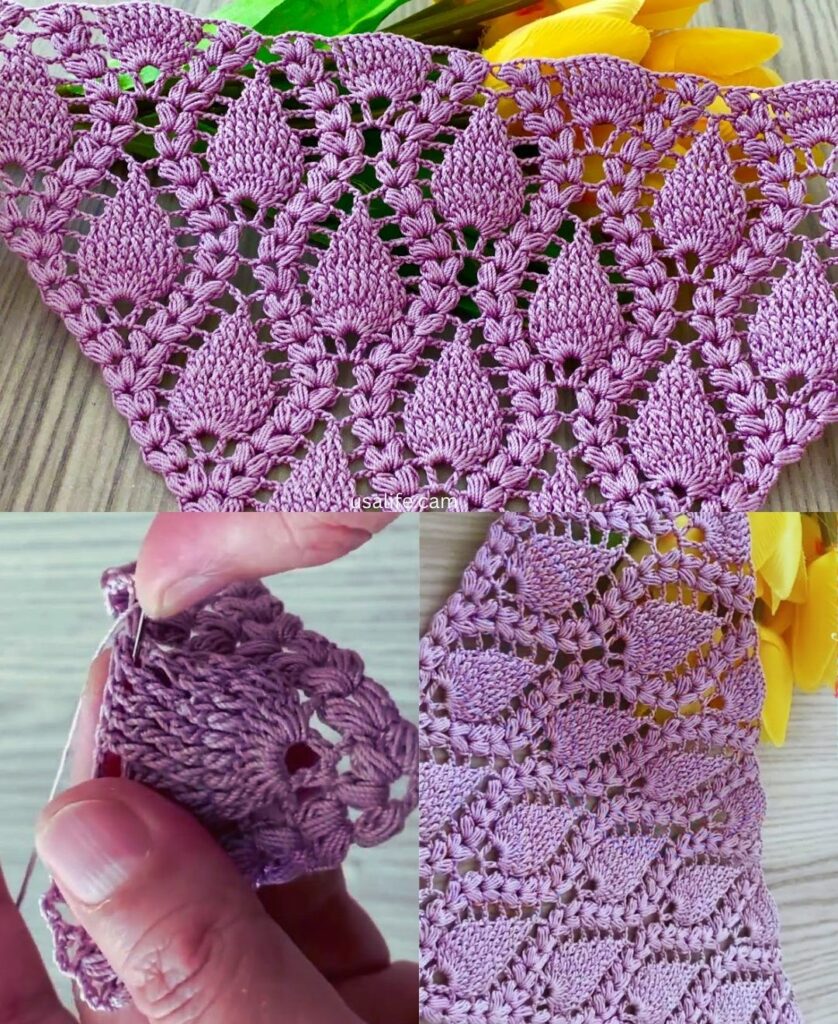
Video tutorial: