 by
by Gemini said
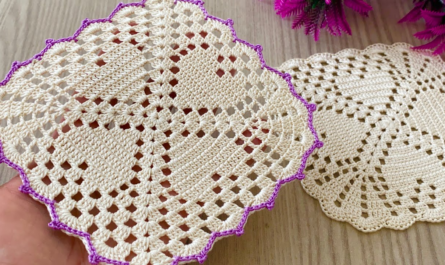
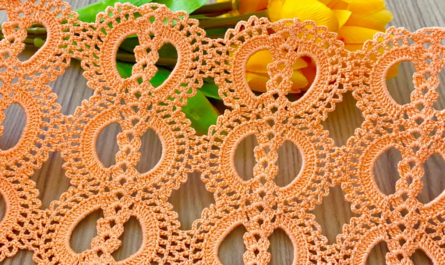
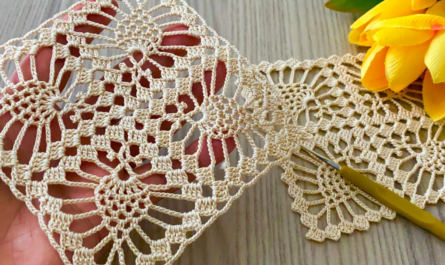
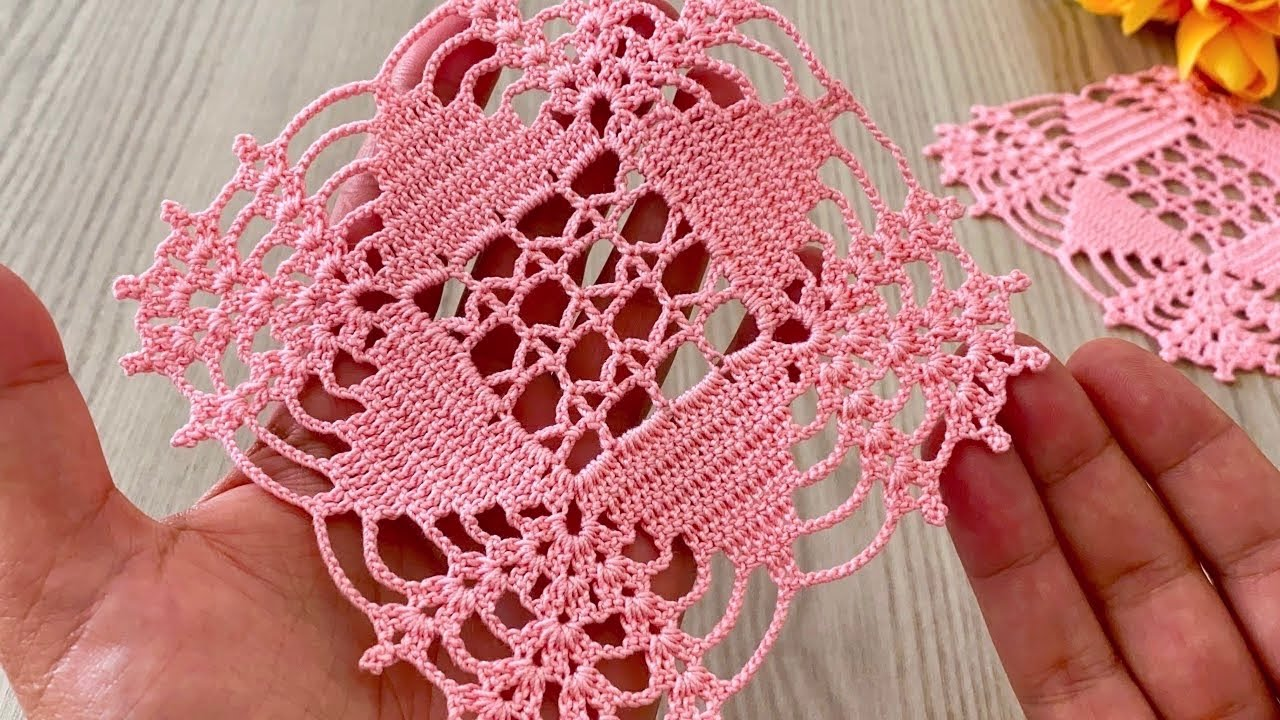
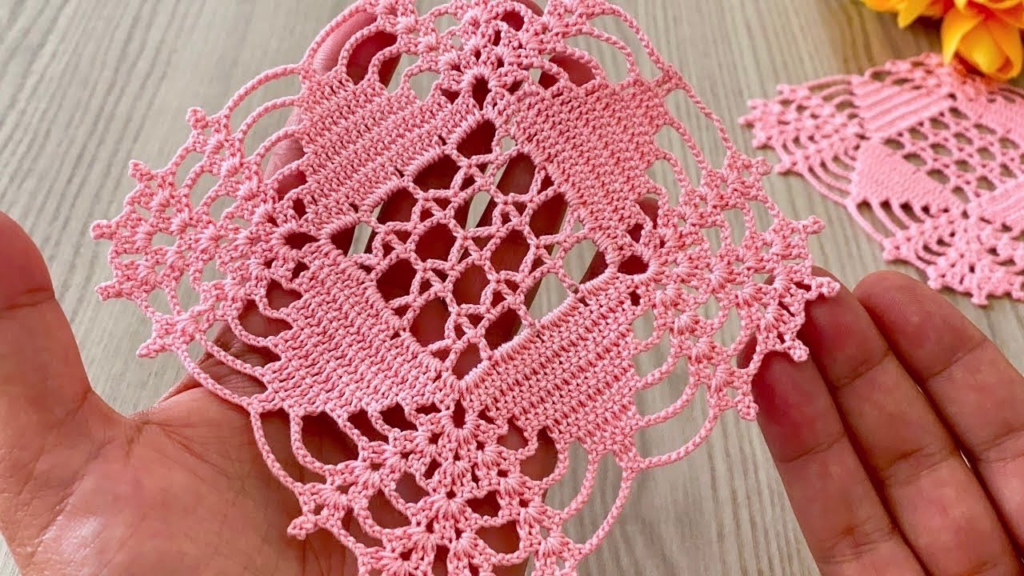
A crochet runner or tablecloth is the ultimate “modular” project. Because it is made of individual motifs joined together, you have total control: make a small set for a coffee table runner, or keep adding motifs until you have a full-sized heirloom tablecloth.
The Hexagon Lace Motif is ideal for this. Hexagons fit together like a honeycomb, creating a sophisticated, vintage look that works beautifully for both modern and traditional home decor.
🧶 The Maker’s Toolkit
For a piece that will sit on a table, you want drape and washability.
| Item | Recommendation | Why? |
| Yarn | Mercerized Cotton (DK or Sport Weight) | It has a slight sheen, doesn’t stretch out of shape, and handles spills well. |
| Hook | 3.5 mm (E/4) or 4.0 mm (G/6) | Creates a “crisp” stitch that highlights the lace pattern. |
| Color | Cream, Linen, or Sage Green | These “nature-neutral” tones make the texture the star of the show. |
Stitch Key (US Terms)
- ch / sl st: Chain / Slip Stitch.
- sc / dc: Single Crochet / Double Crochet.
- V-Stitch: (dc, ch 2, dc) in the same space.
🛠 Step-by-Step: The Lace Hexagon Motif
Round 1: The Center
- Start: Make a Magic Ring (or ch 5 and sl st to form a ring).
- Stitches: ch 3 (counts as dc). Work 11 dc into the ring.
- Join: sl st to the top of the ch 3.
Check: You should have a solid circle of 12 dc.
Round 2: The Sprouting Lace
- Pattern: ch 4 (counts as dc + ch 1).
- Continue: In every stitch around, work (1 dc, ch 1).
- Join: sl st to the 3rd chain of the starting ch 4.
Result: A “spoked wheel” with 12 dc and 12 spaces.
Round 3: Squaring the Hexagon
- Move: sl st into the first ch-1 space.
- First Corner: ch 3, 1 dc, ch 2, 2 dc (all in the same space).
- The Side: ch 1. Skip one ch-1 space. In the next ch-1 space, work 3 dc. ch 1.
- Next Corner: Skip one space. In the next space, work a Corner (2 dc, ch 2, 2 dc).
- Repeat: Follow the (Corner, ch 1, 3-dc Side, ch 1) pattern around.
- Join: sl st to the top of the ch 3.

📐 The “Multipurpose” Math
How many hexagons do you need? This depends on your table size. A standard hexagon motif is usually about 10 cm from flat side to flat side.
To calculate your layout (L), use the following logic:
TotalMotifs=(Length in Motifs)×(Width in Motifs)
- Small Table Runner: 3 motifs wide by 12 motifs long (36 total).
- Standard Tablecloth: 12 motifs wide by 18 motifs long (216 total).
🔗 Joining Your Masterpiece
For a flat, professional finish that won’t “bump” under a dinner plate, use the Join-As-You-Go (JAYG) method.
- Finish your first hexagon completely.
- On the last round of your second hexagon, when you reach a corner, work: (2 dc, sl st into the first hexagon’s corner, 2 dc).
- Continue along the side, slip-stitching into the corresponding spaces of the first hexagon.
- This “zips” the motifs together as you crochet, meaning no sewing at the end!

💡 3 Secrets for an Heirloom Finish
- The “Weighty” Border: Once all your motifs are joined, work 3 rounds of Double Crochet around the entire edge of the runner. This adds weight to the sides, helping it hang beautifully off the edge of the table.
- Blocking is Essential: Table decor must be flat. Pin your finished runner to a blocking board, spray it with a mix of water and a tiny bit of liquid starch, and let it dry. This makes the lace “bloom” and look like a boutique item.
- The “Wildcard” Color: If you are using a neutral cream for the body, consider making the very last round of the border in a deep Forest Green or Gold. It acts as a frame for the table setting.
✨ Beyond the Table
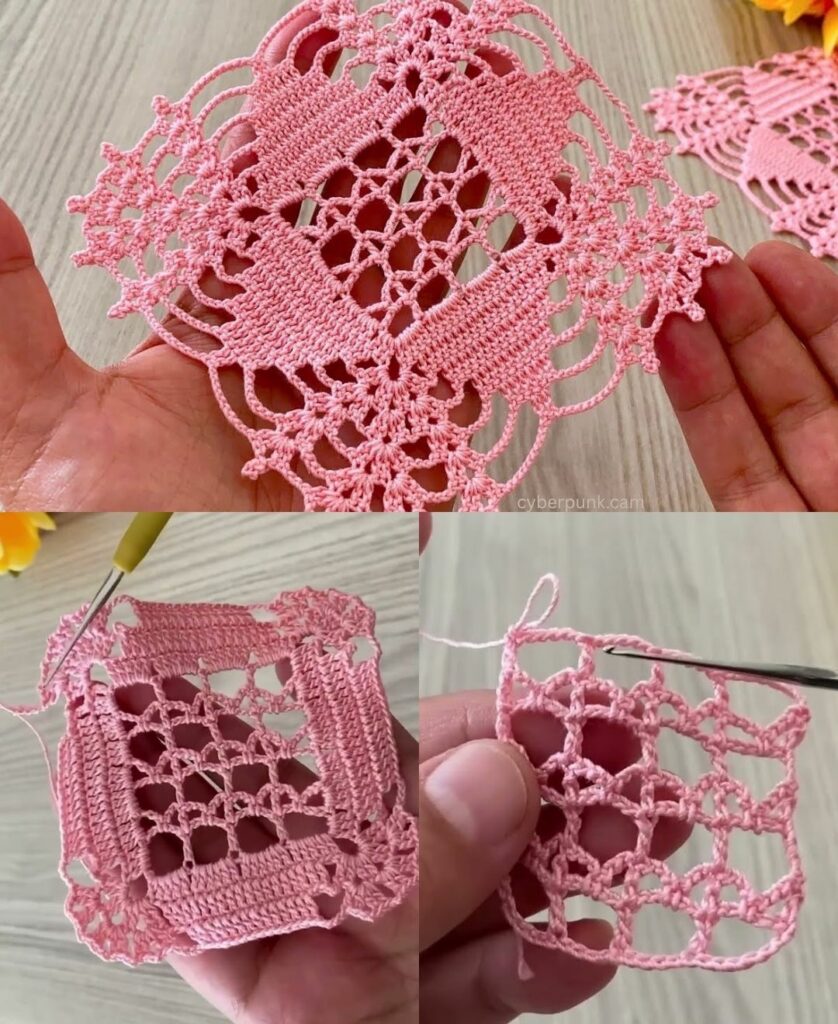
Since this pattern is modular, you can repurpose these motifs! If you find yourself halfway through a runner and realize you’d rather have a garment, you can join these hexagons into a “Honeycomb” Blouse or a Boho Shrug.
Would you like me to help you design a specific “Diamond Layout” for a runner that tapers to a point at each end of the table?