 by
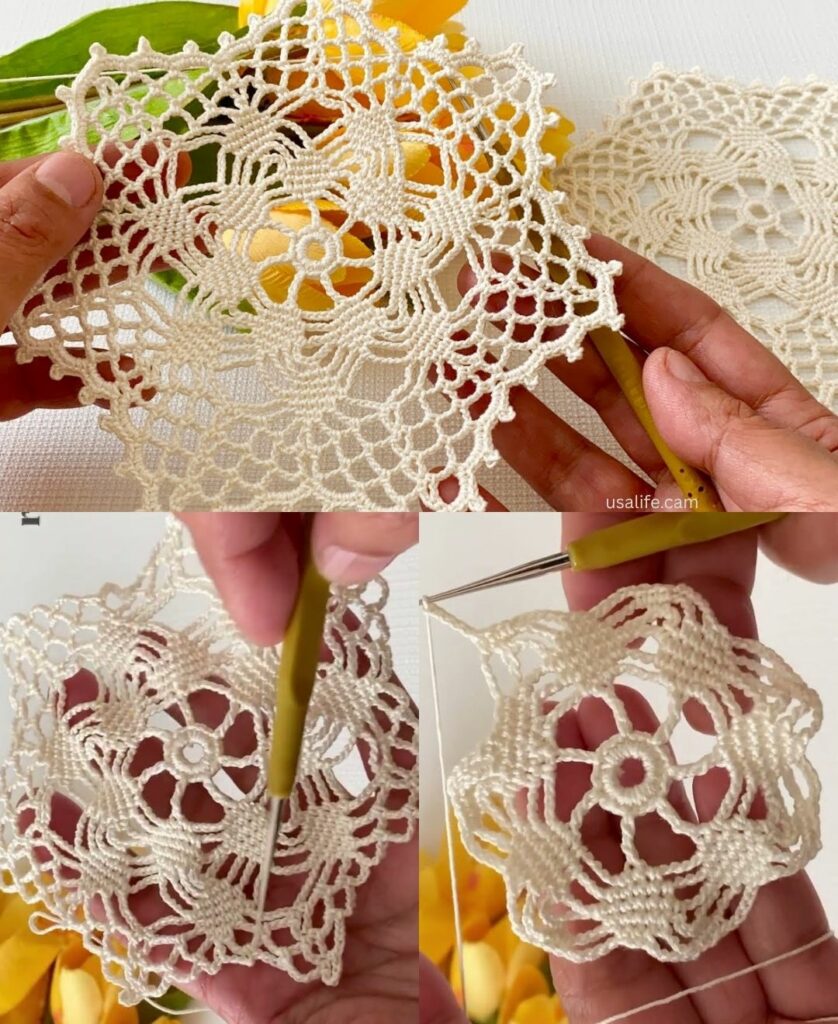
by Creating a motif-based garment or home accessory is a journey in modular design. Whether you are crafting a table runner that drapes elegantly or a blouse that fits your frame, the secret lies in your choice of motif, your joining method, and the “Negative Space” (the gaps) you leave.
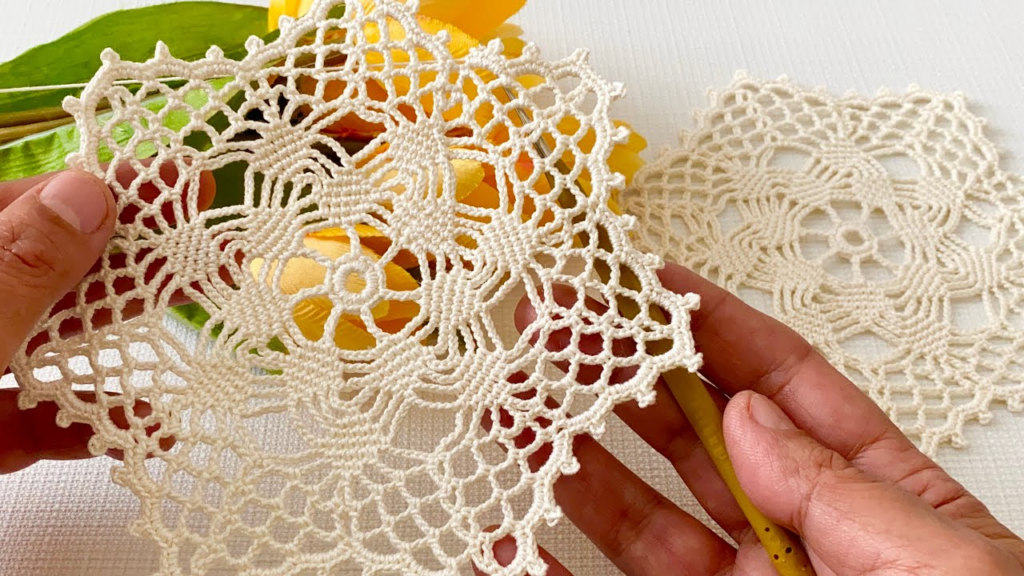
Here is the detailed guide to turning a pile of crochet motifs into functional, professional-grade items.
1. The Motif Selection: “The Multi-Purpose Square”
For both runners and blouses, you need a motif that is structurally balanced.
- Avoid: Extremely lacy motifs for runners (they snag on silverware) or overly bulky, thick motifs for blouses (they don’t drape well).
- The Sweet Spot: Use a 4-Round Square (as detailed in previous advice). It is dense enough to be durable but has enough “open” chain spaces to allow for comfortable joining.
2. Construction: Runner vs. Blouse
| Feature | Runner Strategy | Blouse Strategy |
|---|---|---|
| Joining Method | Mattress Stitch (Sewn) | Join-As-You-Go (JAYG) or Slip Stitch |
| Edge Finish | Heavy border to prevent curling | Delicate edging (picots) for drape |
| Blocking | Strict 90-degree corners | Soft blocking for body movement |
| Yarn Choice | Mercerized Cotton (Stiffness) | Soft Cotton/Bamboo Blend (Drape) |

3. Step-by-Step Execution
A. Creating the Table Runner
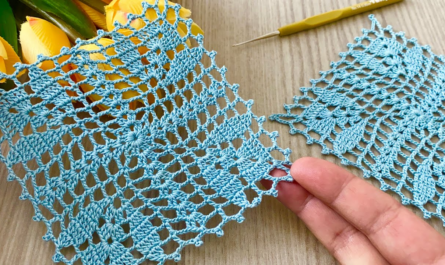
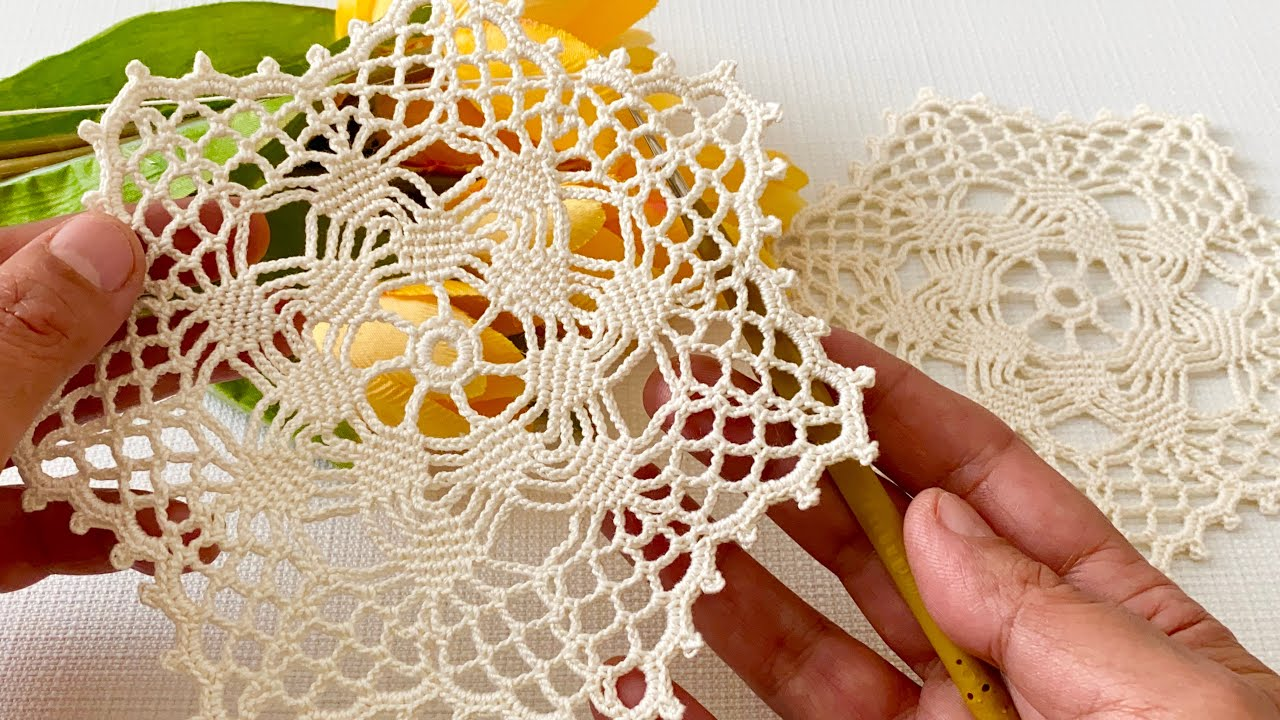
- Layout: Arrange your motifs in a long strip. For a standard table, a width of 3 or 4 motifs is ideal.
- The Join: Use the Mattress Stitch. Lay two motifs side-by-side, right sides facing up. Using a tapestry needle and matching yarn, whip-stitch through the back loops only. This creates a flat, professional seam that won’t cause plates to tilt.
- The Stabilizing Border: This is what separates a runner from a “loose strip.” Once joined, crochet a border around the entire perimeter:
- Round 1: One
dcin every stitch, with(2 dc, ch 2, 2 dc)in the four outer corners. - Round 2: A round of
crab stitch(Reverse Single Crochet) to create a braided, finished edge that won’t stretch.
- Round 1: One

B. Creating the Blouse
- The “Fitting” Layout: Do not sew the motifs into a rectangle. Use a T-shape or Boxy layout.
- Leave gaps for the neck and armholes.
- Pro-Tip: Use a “Join-As-You-Go” (JAYG) method. As you work the final round of a new motif,
ch 1,sl stinto the neighboring motif’sch-1space, thench 1to complete the stitch. This makes the join flexible, allowing the blouse to move with your body.
- Draping: Once the front and back panels are joined, sew them together at the sides and shoulders, leaving the armholes open.
- The Neckline: To make the blouse look “finished,” work two rows of
single crochetaround the neck and armholes. This “frames” the motifs and prevents the edges from flaring out.

4. The “Pro” Secret: Dimensional Stability
The biggest risk with motif projects is “sagging” over time.
- For the Runner: Use Fabric Starch. Once the runner is finished, spray it lightly with fabric starch and pin it to a board. It will become rigid and lie perfectly flat on your table, mimicking the look of traditional lace.
- For the Blouse: Never use starch. Instead, “Steam Block” the garment panels before joining them. This locks the stitches into their final size so that your blouse doesn’t grow two sizes larger the first time you wash it.
5. Troubleshooting Common “Motif” Problems
- The “Hole” Issue: If your joins feel too loose, go down a half-size hook for the joining round specifically. This keeps the seams tighter than the motifs themselves.
- Motif Size Mismatch: If one motif is slightly smaller than the rest, use a “loose” join for that specific motif (add an extra chain in the join) to force it to match the size of its neighbors.
Are you planning to make a specific style of blouse (e.g., boxy/cropped or fitted) or a specific size of table runner so I can help you calculate the exact number of motifs needed?