 by
by Creating garments like a blouse or a shawl using crochet is a wonderful way to move beyond small accessories and into the world of wearable art. Because you are interested in motif-based designs (like the squares and flowers we have discussed), you have a distinct advantage: you can build these items piece-by-piece, which makes them highly customizable to your body and style.
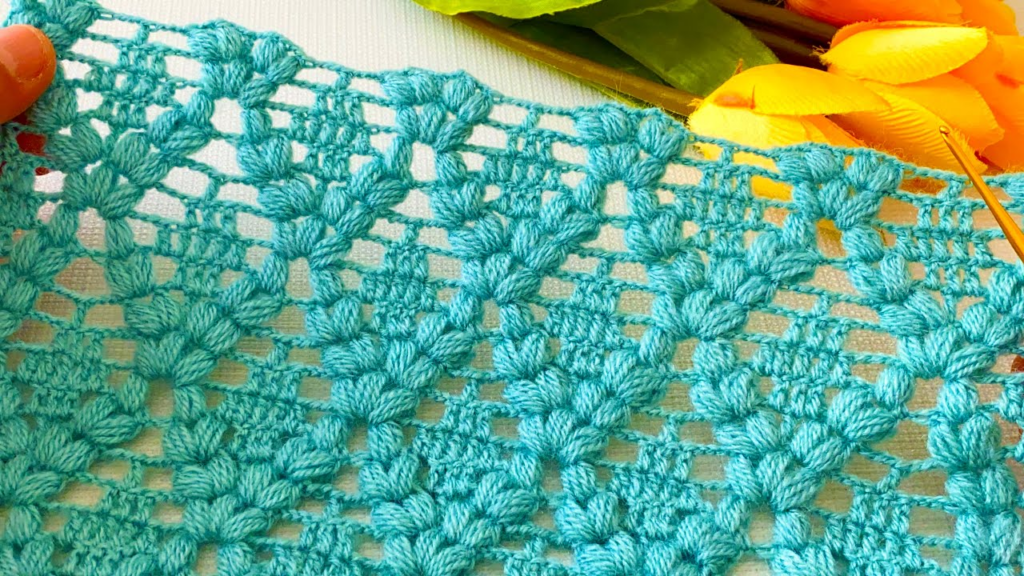
Here is the professional guide to constructing these two distinct types of projects.
1. The Blouse: Construction via Modular Layout
A crochet blouse succeeds or fails based on fit and weight. Unlike a blanket, a blouse must account for shoulder slope, armholes, and waist shaping.
- The Planning Phase:
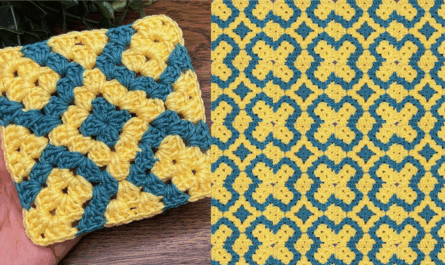
- Swatch First: Crochet one of your chosen motifs (like the Timeless Lattice Square). Measure it precisely. If your motif is $10 \times 10\text{ cm}$, and you want a $50\text{ cm}$ wide shirt, you know you need 5 motifs across.
- The T-Layout: The most reliable blouse shape for crochet is the “Boxy T.” Create two large panels—one for the front, one for the back. Sew the shoulders together, leaving a gap for the neck. Sew the sides together, leaving large gaps (about $20\text{–}25\text{ cm}$) for the armholes.
- The Joining Technique:
- Use the “Join-As-You-Go” (JAYG) method. Because your blouse needs to move with your body, a flexible join is better than a stiff, sewn seam. The
ch-1bridges allow the garment to have a natural “give.”
- Use the “Join-As-You-Go” (JAYG) method. Because your blouse needs to move with your body, a flexible join is better than a stiff, sewn seam. The
- The “Professional” Edge:
- After the main body is joined, always finish the neckline and armholes with 2 rounds of Single Crochet (sc). This “locks” the edges so they don’t flare or stretch out over time.

2. The Shawl: Construction via Geometric Expansion
A shawl is much more forgiving than a blouse. You can build it as a triangle, a rectangle, or even a series of connected motifs.
- The Geometric Expansion:
- The Triangle Method: Start with one motif at the neck. In the next row, add two motifs, then three. By increasing the number of motifs each row, you naturally create a large, draped triangle that sits perfectly over the shoulders.
- The “Flow” Factor:
- To make your shawl feel like a high-end accessory, prioritize the edge. A “picot” border (
ch 3,sl stinto the first chain) adds a delicate, decorative texture that makes the shawl look intentionally designed rather than just a collection of squares.
- To make your shawl feel like a high-end accessory, prioritize the edge. A “picot” border (
- Drape is King:
- For a shawl, you want movement. If you find your motifs are too stiff, switch to a larger crochet hook (e.g., if the yarn calls for a 3.5 mm, use a 4.5 mm). This creates “negative space” between the stitches, allowing the fabric to drape like liquid rather than standing up like cardboard.
3. Key Differences for Success
| Feature | Blouse Strategy | Shawl Strategy |
| Fiber Choice | Mercerized Cotton (durable, cool) | Bamboo or Silk Blend (soft, flowy) |
| Join Style | Flexible (JAYG) for body movement | Decorative (Sewn or Laced) for elegance |
| Blocking | Steam lightly to maintain structure | Block aggressively to open up the lace |
4. Expert Pro-Tips for Both
- The “Neutral” Frame: If you are using multi-colored motifs, join them all with a single, neutral color (cream, beige, or black). This acts as a visual border, turning a collection of pieces into a professional-looking garment.
- Blocking is Non-Negotiable:
- For the Blouse: Block the panels before you join them. This ensures your armholes and necklines are perfectly symmetrical.
- For the Shawl: Once the whole piece is finished, pin it out, spray it, and let it dry. This opens up the stitches and gives the shawl its final, graceful shape.
- Manage the Weight: Remember that cotton motifs can be heavy. If you are making a full-length blouse, consider using a lighter-weight yarn to ensure the shirt doesn’t pull down on your shoulders.
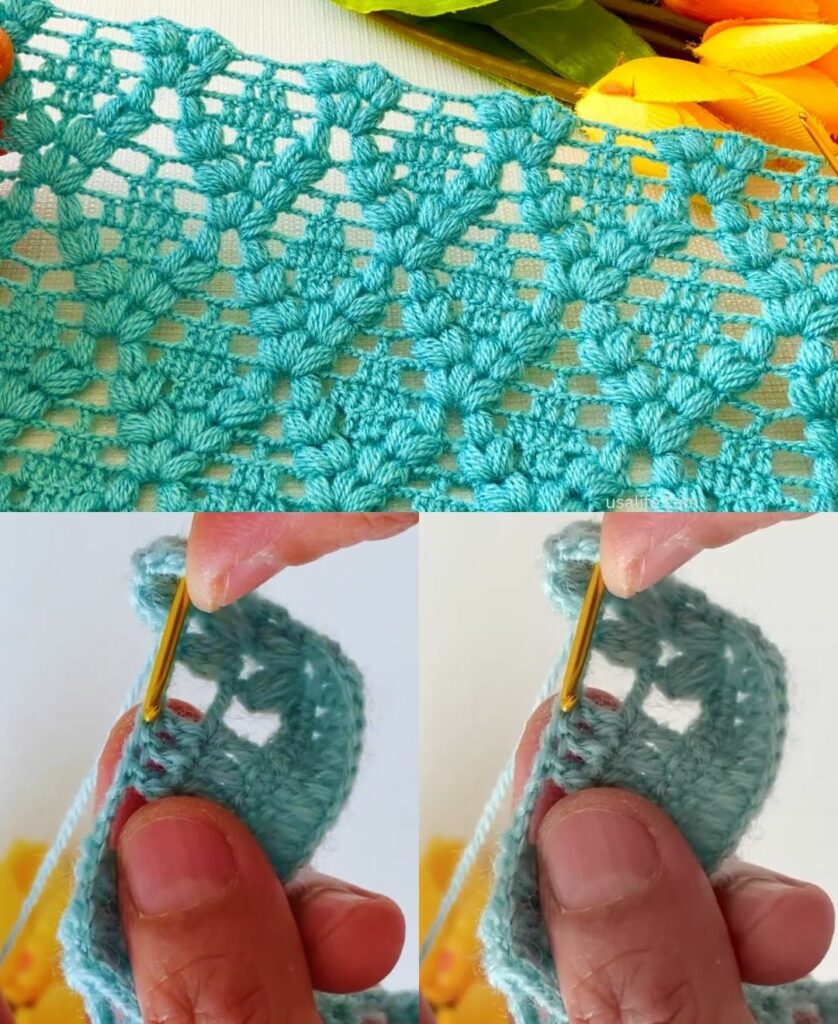
Would you like me to create a specific project plan—for example, the number of squares you would need to reach a specific blouse size—or would you like to focus on a particular “edge” pattern to finish off a shawl?