 by
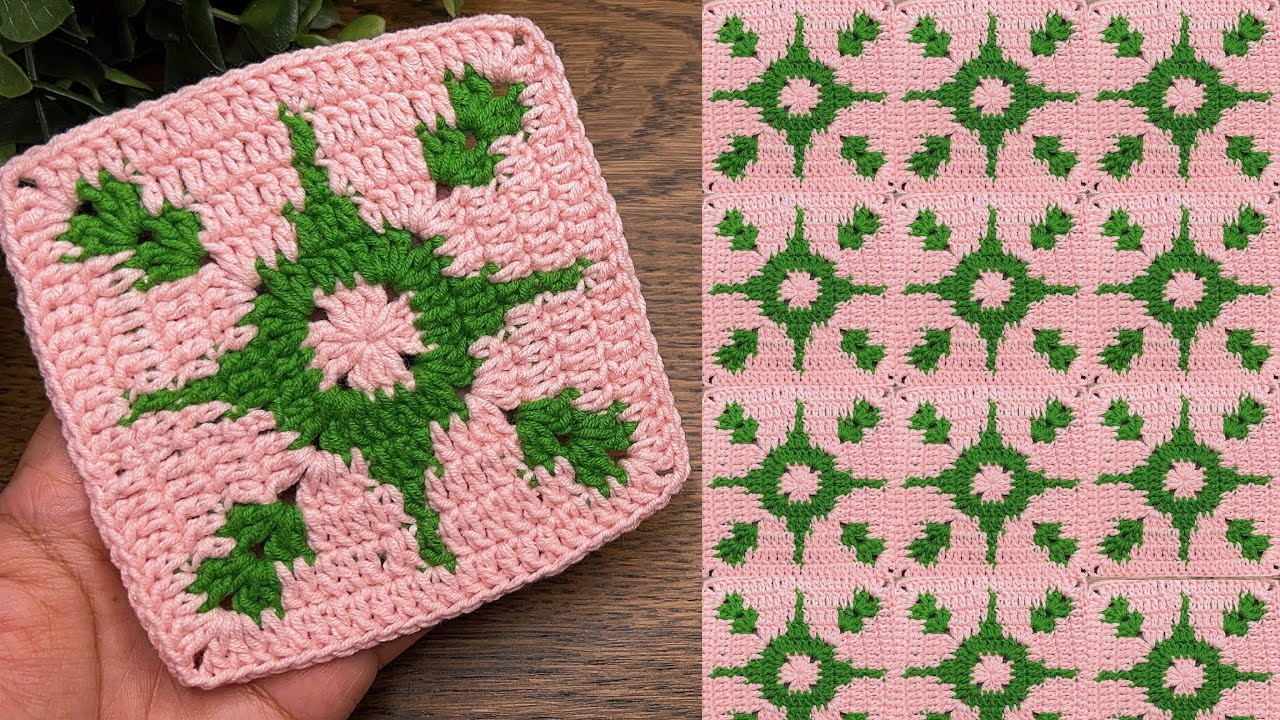
by Crocheting a square motif is the perfect starting point for any maker. It is a modular building block: once you master one, you can sew them together to make anything from a small coaster to a full-sized blanket, a stylish blouse, or a structured table runner.
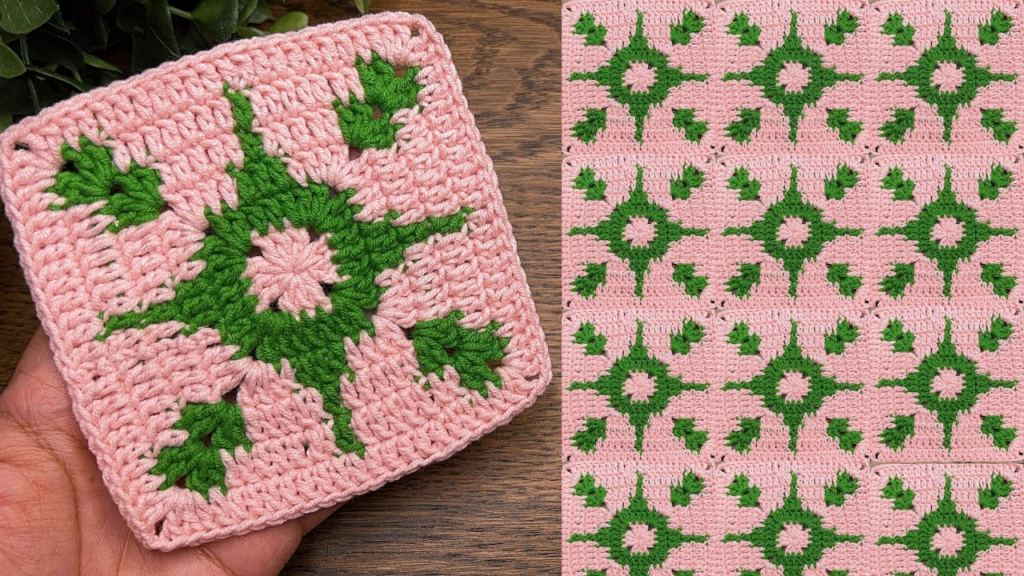
Here is your detailed, step-by-step guide to the “Classic Solid Square.”
🧶 Your Beginner Toolkit
- Yarn: Use a medium-weight (DK or Worsted) cotton yarn in a light, solid color. Cotton has the best “stitch definition,” making it easier to see exactly where to put your hook.
- Hook: A 4.0 mm or 5.0 mm crochet hook is ideal for beginners.
- Stitch Key (US Terms):
- ch (chain): Yarn over, pull through loop.
- sl st (slip stitch): Insert hook, yarn over, pull through both stitch and loop on hook.
- dc (double crochet): Yarn over, insert hook, pull up loop, yarn over, pull through two loops, yarn over, pull through final two loops.
🛠 The Step-by-Step Construction
Round 1: The Core
- The Ring:
ch 4. Insert your hook into the first chain andsl stto form a ring. - The Start:
ch 3(this counts as your firstdc). - The Cluster: Work 2 dc into the center of the ring. (You now have a cluster of 3 stitches).
- The Corner:
ch 2. - The Pattern: Work a cluster of 3 dc into the ring, then
ch 2. Repeat this process until you have 4 clusters in total. - The Join:
sl stinto the top of your initialch 3.

Round 2: Growing the Square
- Move to the Corner:
sl stacross the next 2 stitches and into the nearest cornerch-2space. - The Corner:
ch 3(counts asdc), 2 dc, ch 2, 3 dc all into that same corner hole. - The Transition:
ch 1. - The Sides: Move to the next corner hole and work 3 dc, ch 2, 3 dc.
- Repeat: Do this for all 4 corners, remembering to
ch 1between each corner cluster. - The Join:
sl stinto the top of your startingch 3.
Round 3: Building the Square
- Move to the Corner:
sl stinto the first corner hole. - The Corner:
ch 3, 2 dc, ch 2, 3 dcin the corner. - The Side:
ch 1. Work a cluster of 3 dc into the gap created by thech 1from the round below.ch 1. - The Pattern: Work your corners as
(3 dc, ch 2, 3 dc)and your side gaps as(3 dc). - The Join:
sl stinto the top of your startingch 3.

🌟 3 Keys to a Professional Look
- Tension Consistency: If your square is curling into a bowl, your stitches are too tight. Try to relax your hands. If the square is “ruffling” (wavy edges), your stitches might be too loose. With practice, you will find the rhythm that keeps the square flat.
- The “Turning” Secret: If your square starts to look like a spiral, turn your work over after every round. By working the next round in the opposite direction, your stitches stay perfectly vertical and aligned.
- Blocking (The Secret Sauce): Your motif will look much better after it has been “blocked.” Lay the square on a soft surface, pin the four corners down so they are sharp $90^\circ$ angles, and lightly steam it with a handheld steamer. Once it dries, it will hold that perfectly crisp shape forever.
💡 What to do next?
Now that you have your first square, you can:
- Join them: Use a “Mattress Stitch” with a tapestry needle to sew them together side-by-side.
- Add a Border: Once you have a larger project, work a round of
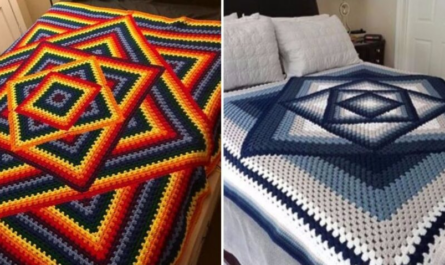
sc(single crochet) around the entire outer edge to give it a neat, finished frame. - Experiment: Try changing your yarn color at the start of each round to create stunning, modern patterns.
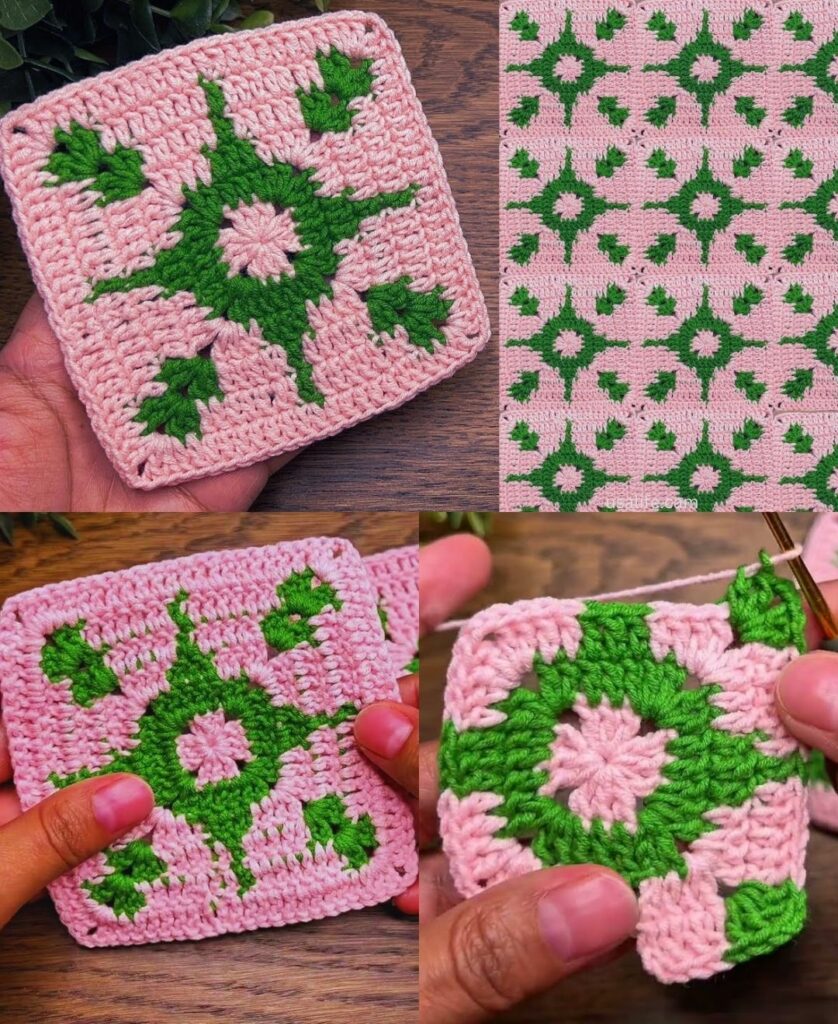
Would you like me to explain how to join your motifs together, or are you interested in a slightly more decorative “lacy” square pattern next?