 by
by To design a motif that transitions seamlessly from a flat, stable Table Runner to a draping, elegant Blouse, the stitch pattern must strike a balance: it needs a structural center to hold its shape, combined with an open, airy border for flexibility and easy joining.
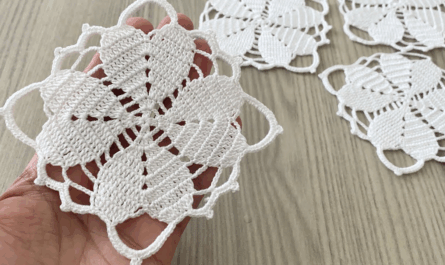
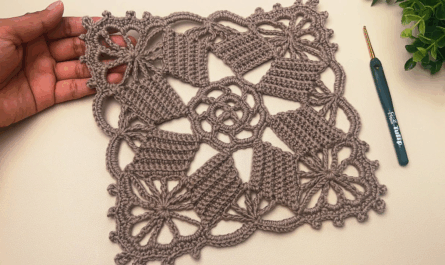
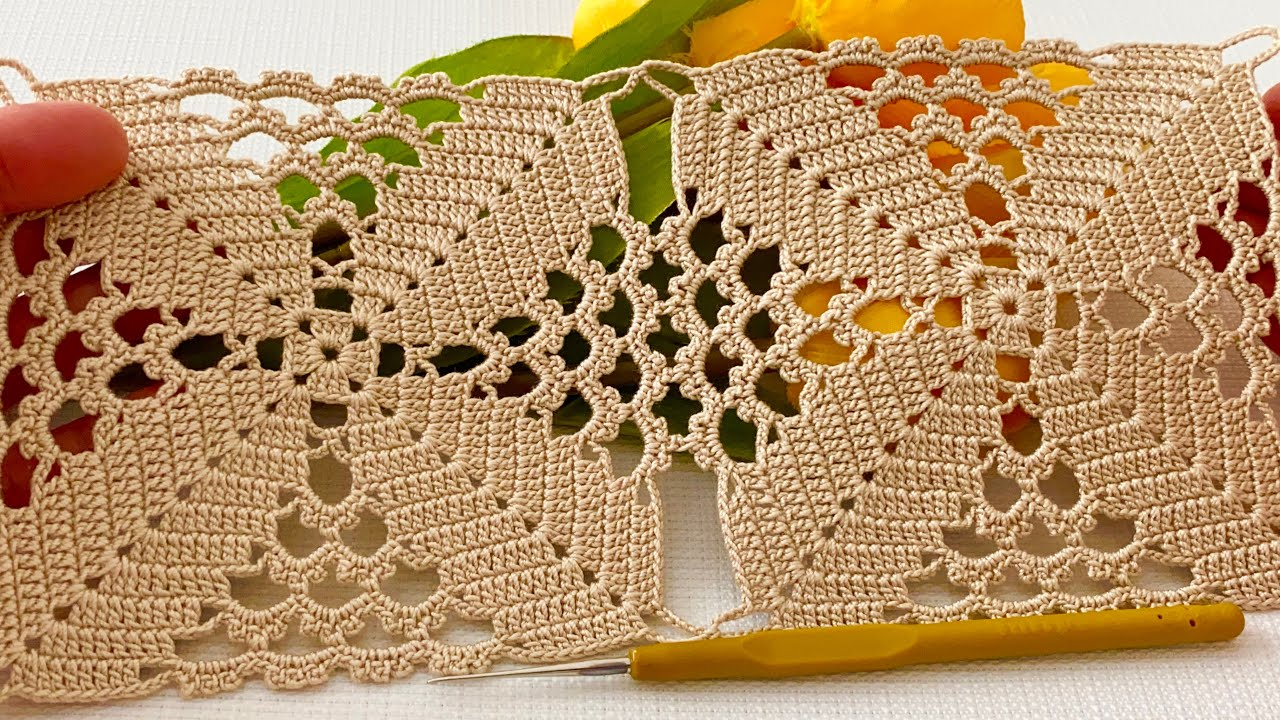
This pattern features the “Verona Lace Hexagon.” Hexagons are exceptionally trendy for blouses because they mimic the natural curves of the body better than squares, while creating a beautiful geometric interlocking tile effect for a runner.
I. Technical Blueprint & Materials
1. The Fiber Selection
- For the Runner: 100% Mercerized Cotton (DK weight). It provides a smooth, glaze-like finish that resists stains and stays flat when plates or glasses are set on it.
- For the Blouse: A Linen-Silk or Bamboo blend (Sport or Fingering weight). These fibers have natural “weight” and drape beautifully against the body.
2. Gauge & Sizing
- Using a 3.5mm (E) hook with DK cotton makes a firm, 5-inch wide hexagon ($12.5\text{cm}$) across the flats.
- Using a 4.5mm (G) hook with a bamboo blend creates a loose, fluid 6-inch motif ($15\text{cm}$) perfect for apparel.
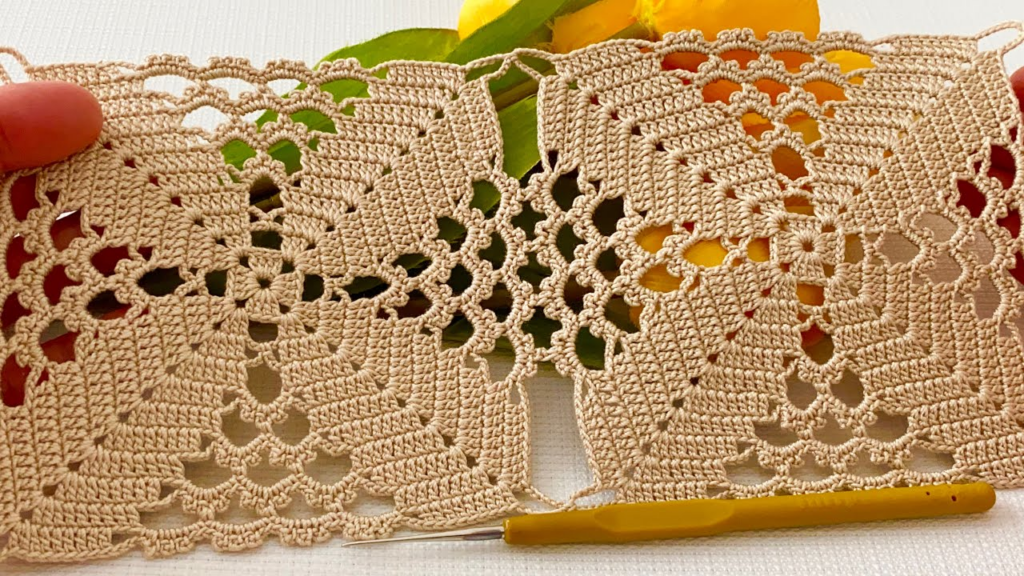
II. The Verona Lace Hexagon Pattern (US Terms)
Round 1: The Structural Core
- Magic Ring (MR): Ch 3 (counts as 1st dc).
- Work 11 dc into the ring.
- Sl st to the top of the beginning ch-3. (12 dc total).
- Detail: Pull the center tail tightly to seal the middle completely flat.
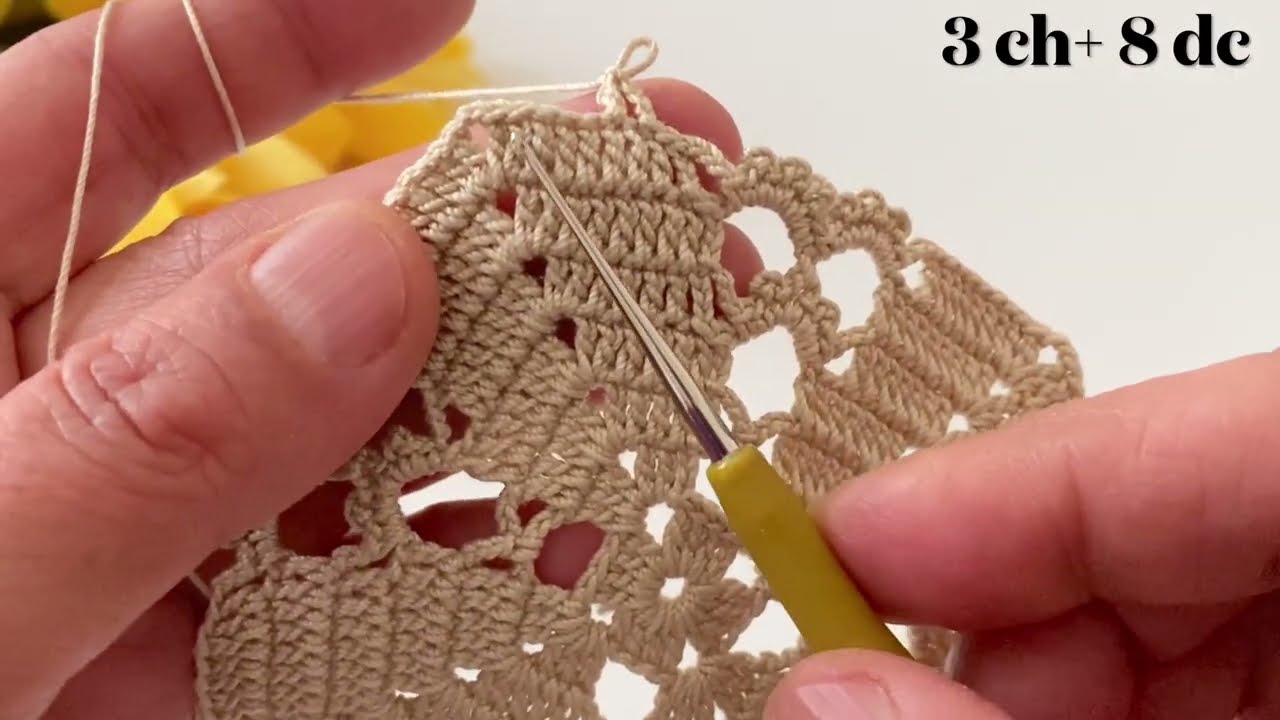
Round 2: The Eyelet Starburst
- Ch 4 (counts as dc + ch 1).
- dc in the next stitch, ch 1. Repeat from * to * around.
- Sl st into the 3rd chain of the starting ch-4. (12 dc, 12 ch-1 spaces).
Round 3: The Hexagonal Shaping (Setting the 6 Corners)
- Sl st into the first ch-1 space. Ch 2 (does not count as a stitch).
- In the next ch-1 space, work a Corner: (2 dc, ch 2, 2 dc).
- In the next ch-1 space, work a Side: 2 hdc.
- Repeat from * to * around 5 more times.
- Sl st to the first dc to join. (6 Corners, 6 Side sections).
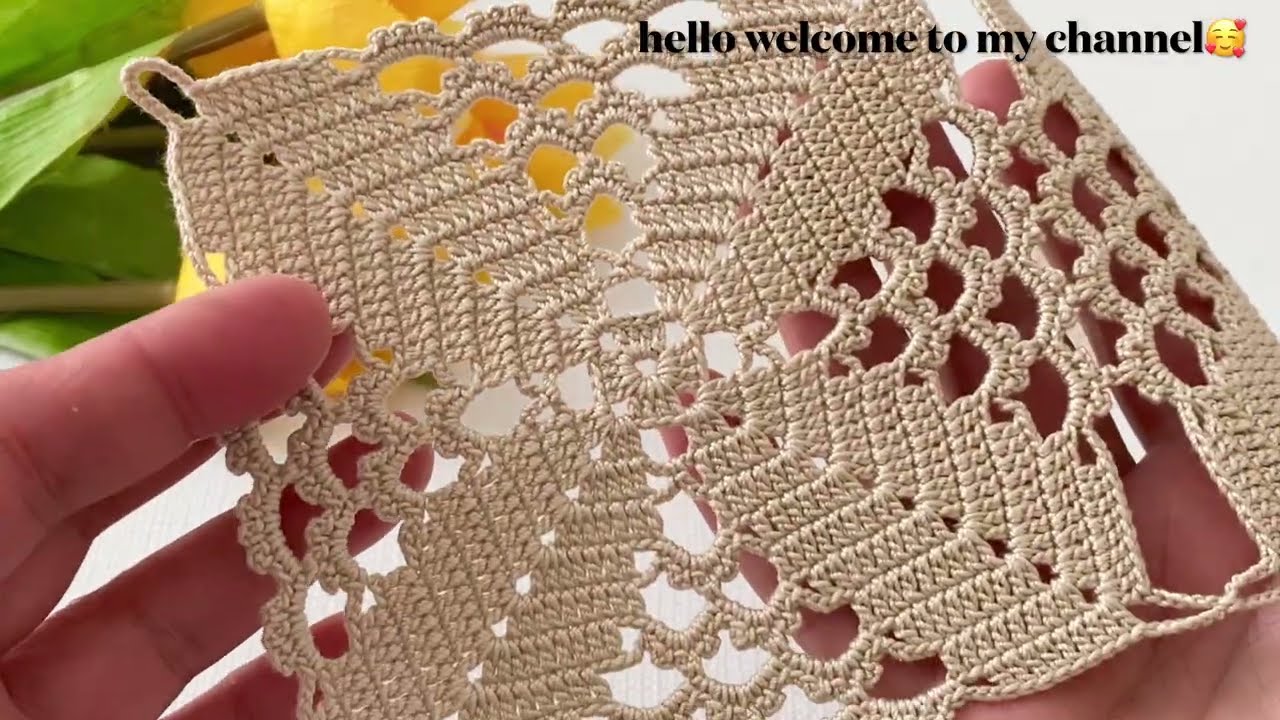
Round 4: The Open-Mesh Lace
- Sl st across to the first corner ch-2 space.
- Corner: (Ch 3, 1 dc, ch 3, 2 dc) in the corner space.
- Side: Ch 2, skip the dc cluster, work 3 dc into the space between the dc and hdc clusters, ch 2.
- Repeat this layout around each side. Sl st to join.
Round 5: The Frame & Connecting Row
- Sl st to the corner ch-3 space. Ch 1, (2 sc, ch 2, 2 sc) in the corner.
- Side: sc in each of the next 2 dc, 2 sc inside the ch-2 space, sc in each of the next 3 dc, 2 sc inside the ch-2 space, sc in each of the next 2 dc.
- Repeat around. Sl st to join. Fasten off with a long tail.
III. “Detail and Detail” Project Assembly
Project 1: The Multipurpose Table Runner
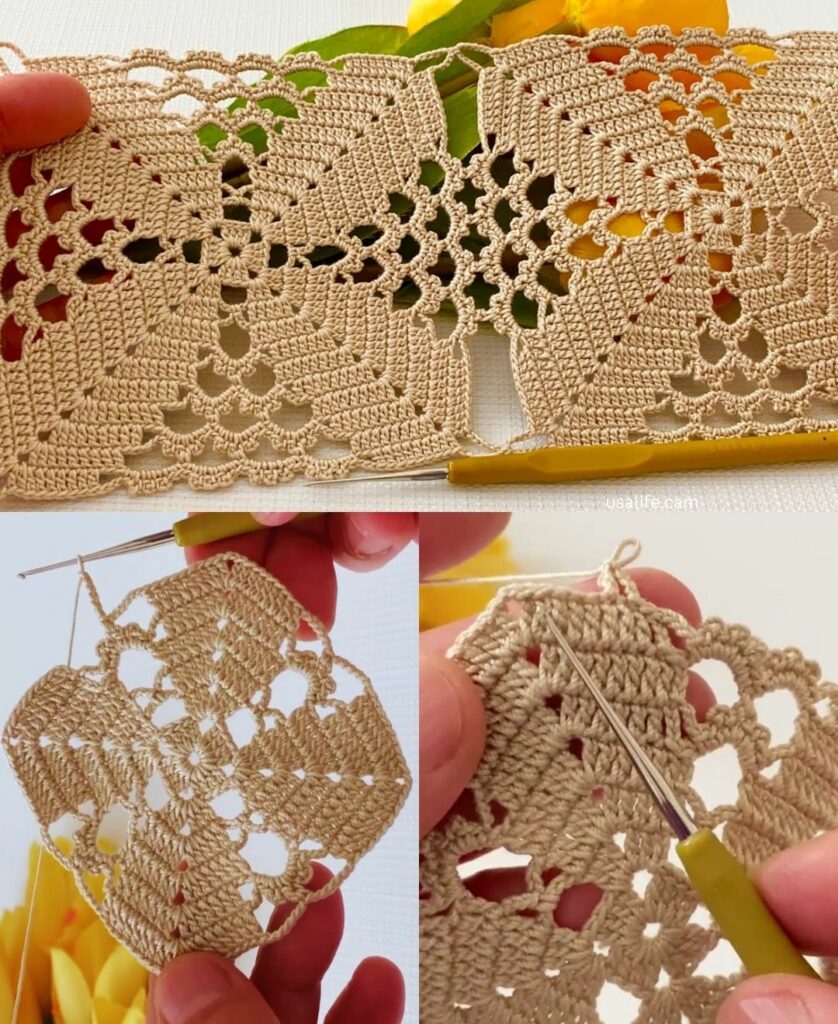
To make this look like an interlocking geometric tile installation:
- Layout: Arrange the hexagons in rows alternating $3 \times 2 \times 3 \times 2$ to create a staggered, zigzag border down the length of the table.
- The Join: Use a tapestry needle and the Whipstitch Join through the back loops only. This makes the seam completely flush and rigid, ensuring the runner functions as a smooth surface.
- The Finish: Spray the entire runner with liquid fabric starch, pin the edges aggressively into uniform points, and iron on low heat to set the crisp geometric structure.
Project 2: The Trendy Mesh Blouse
To assemble these motifs into a lightweight summer top:
- Layout: Create two main panels (Front and Back). For an average size, make each panel 3 hexagons wide by 4 hexagons tall.
- The Join: Use the Join-As-You-Go (JAYG) method on Round 5. Instead of working a standard ch-2 in the corners, work a ch 1, slip stitch into the adjacent motif’s corner, ch 1. This connects the pieces while preserving an incredibly airy, flexible mesh drape.
- The Silhouette: Leave the top central hexagon unjoined to create a natural, comfortable scoop neckline. Join the side motifs up to the underarm, leaving the top 2 hexagons open for wide, dramatic armholes.
IV. Summary Design Grid
| Architectural Aspect | Table Runner Strategy | Blouse Strategy |
| Joining Tension | Stiff and tight | Loose and elastic |
| Edge Treatment | Blocked sharp points | Soft, unaltered natural scallops |
| Color Approach | Monochrome (Cream or Linen) | Multi-color (Ombré transitions) |
Are you going to work this motif all in one continuous color for a clean modern style, or are you planning an accent border to frame the edges?